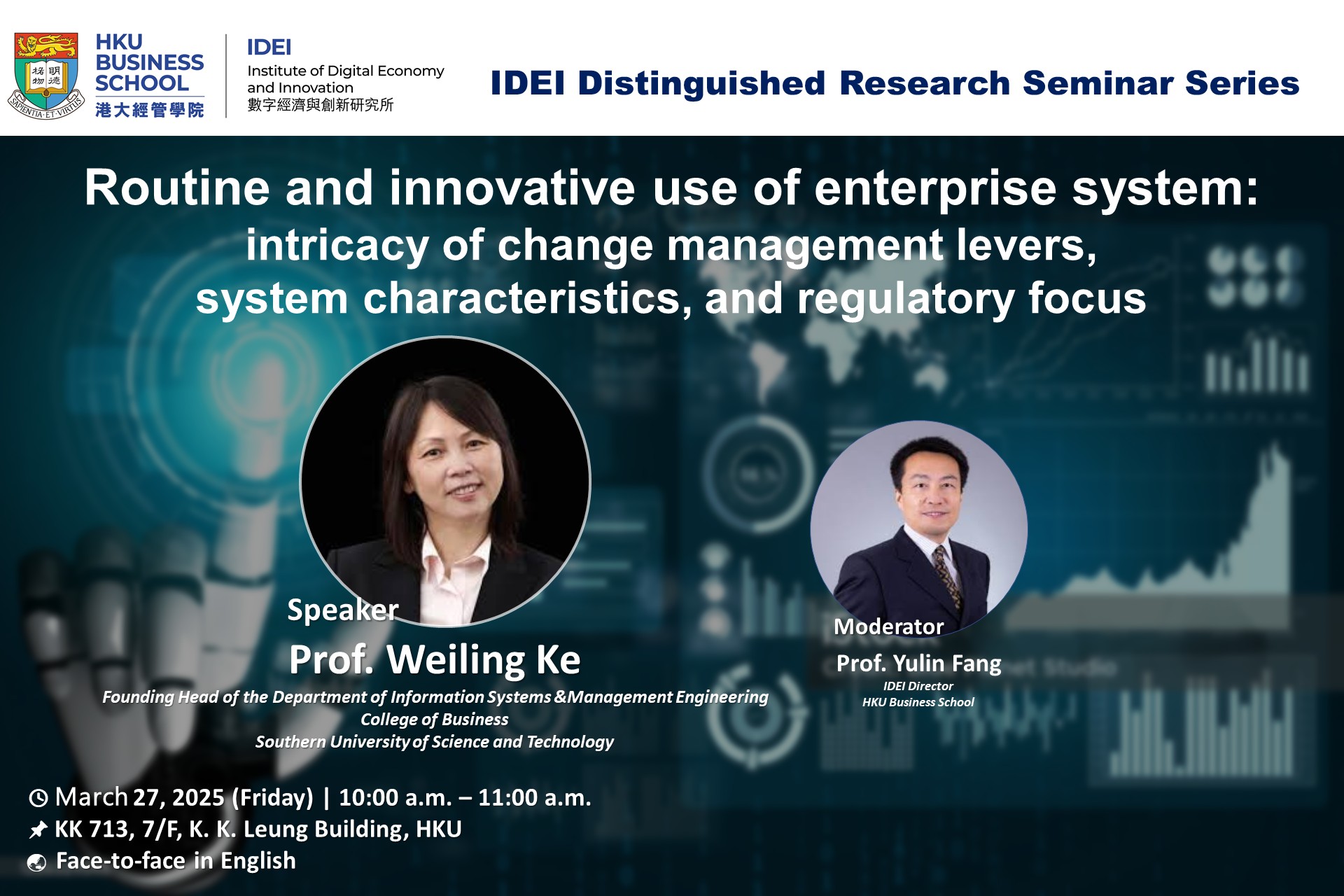
Routine and innovative use of enterprise system: intricacy of change management levers, system characteristics, and regulatory focus
March 27, 2026 | 10:00 a.m. — 11:00 a.m.
KK 713, 7/F, K.K. Leung Building, HKU
Face-to-face in English
No registration required
SPEAKER
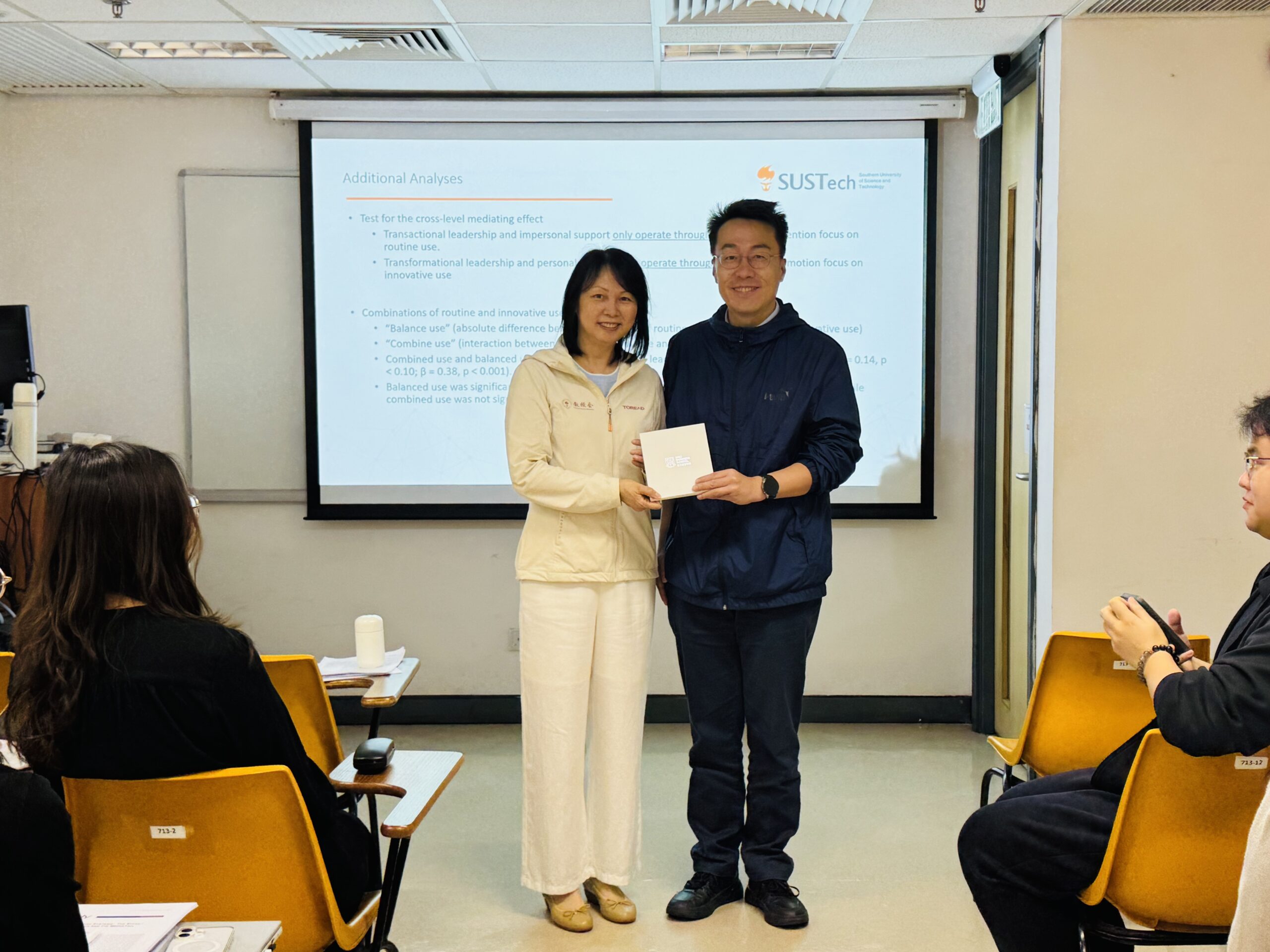
Prof. Weiling Ke
Founding Head of the Department of Information Systems &Management Engineering
College of Business
Southern University of Science and Technology
SPEAKER
Prof. Weiling Ke
Weiling KE is Professor and Founding Head of the Department of Information Systems and Management Engineering in the College of Business at Southern University of Science and Technology. Prior to joining SUSTech, she was Professor at the David D. Reh School of Business at Clarkson University. Her research interests include digital transformation, digital innovation, and platform ecosystems. She has published in leading journals such as MIS Quarterly, Information Systems Research, Journal of Management Information Systems, Journal of Operations Management, Journal of the Association for Information Systems, and Personnel Psychology. She currently serves as Senior Editor of Information & Management.
ABSTRACT
The success of enterprise systems (ESs) hinges on employees’ ability to integrate these systems into their daily tasks, encompassing both routine and innovative uses. This study proposes a model based on the context-specific theorization framework that examines the interplay between usage context (leadership styles and support structures), system characteristics (modularity and complexity), and user characteristics (situational regulatory focus) in shaping employees’ ES usage (routine and innovative uses). Using longitudinal field survey data from employees and managers at a large company implementing a customer-relationship-centric ES, we identify three key findings. First, distinct paths emerge from leadership styles (transactional versus transformational) and support structures (impersonal versus personal) that influence ES use through situational regulatory focus (prevention versus promotion). Second, system characteristics exhibit varying moderating effects: system modularity strengthens the relationship between prevention focus and routine ES use. However, it has no significant effect on the relationship between promotion focus and innovative ES use. In contrast, system complexity weakens the relationship between prevention focus and routine ES use while strengthening the relationship between promotion focus and innovative ES use. Third, routine and innovative ES use differentially influence job outcomes, including leader-rated job performance and employee self-evaluated job satisfaction. In summary, organizations should tailor change management levers, consider system design nuances, and acknowledge individual regulatory focus to maximize ES potential and improve employee outcomes. Theoretical contributions and managerial implications are discussed.