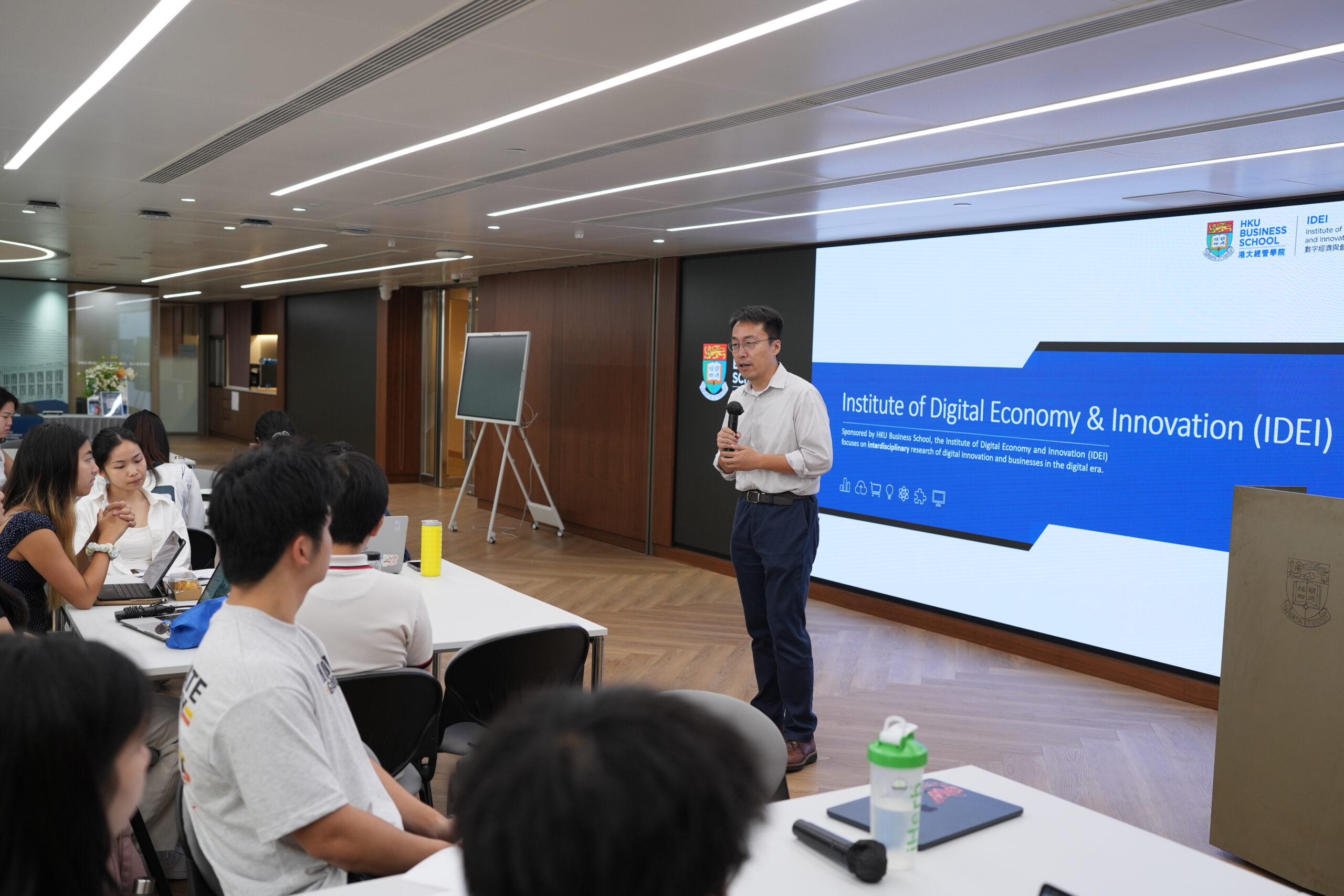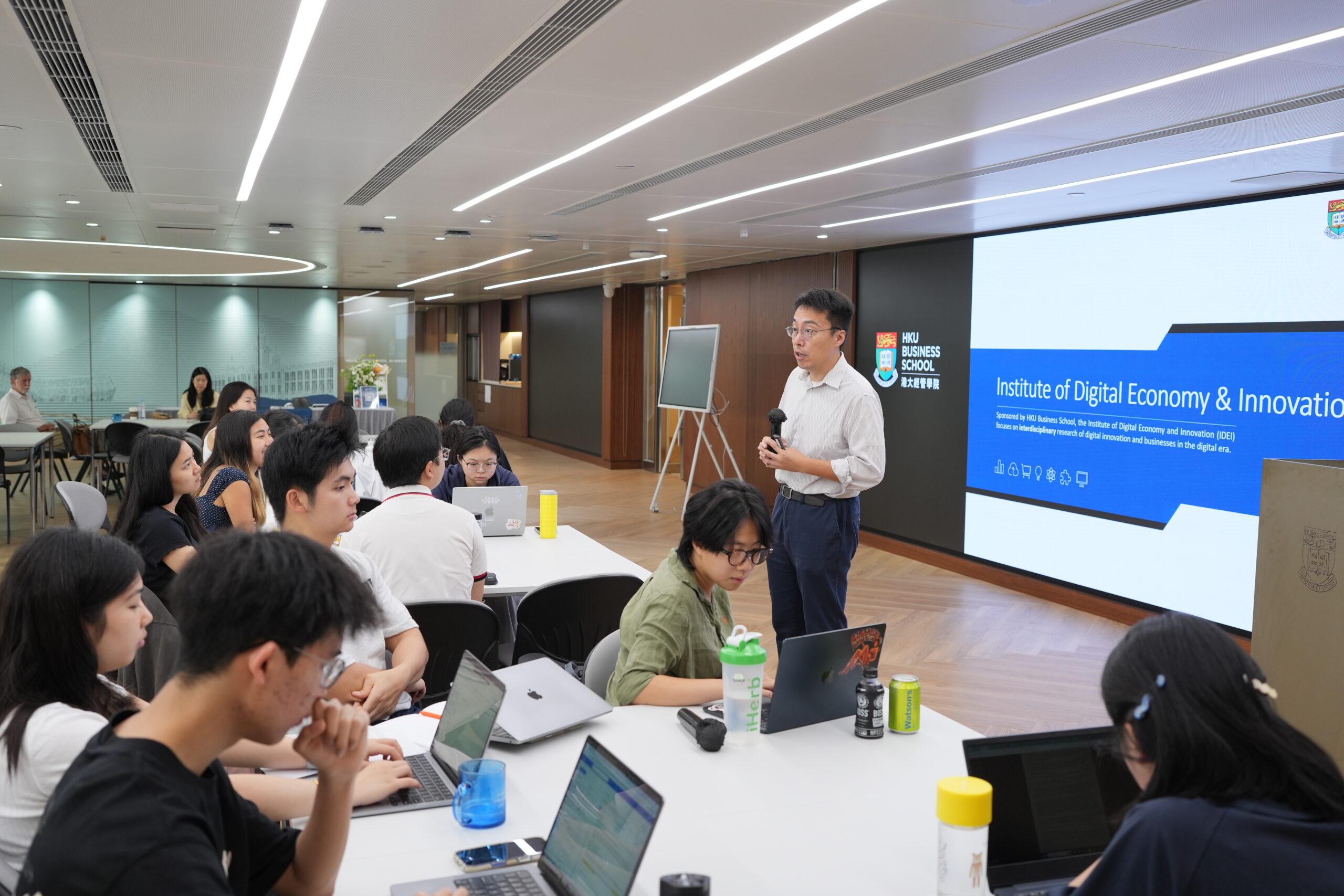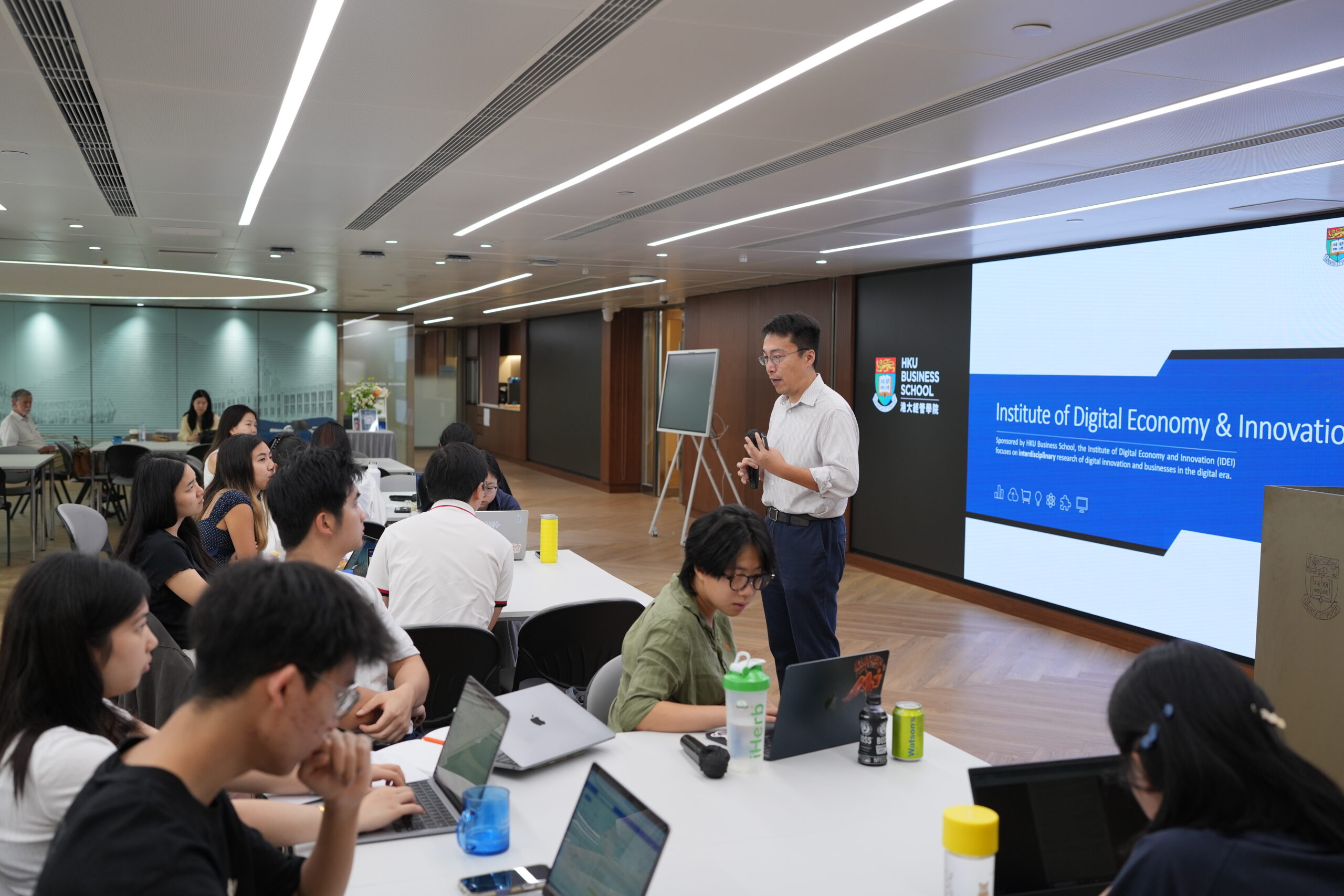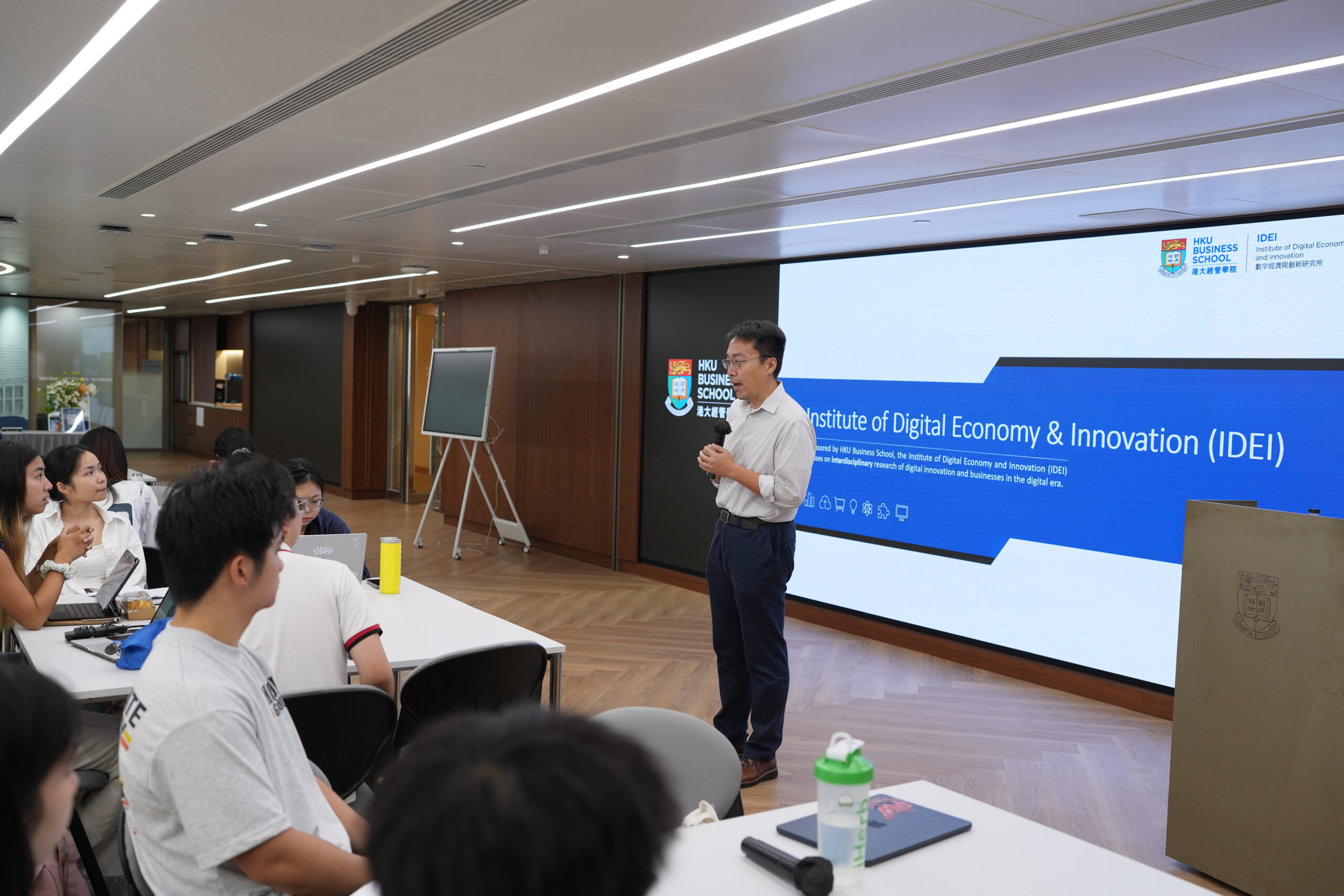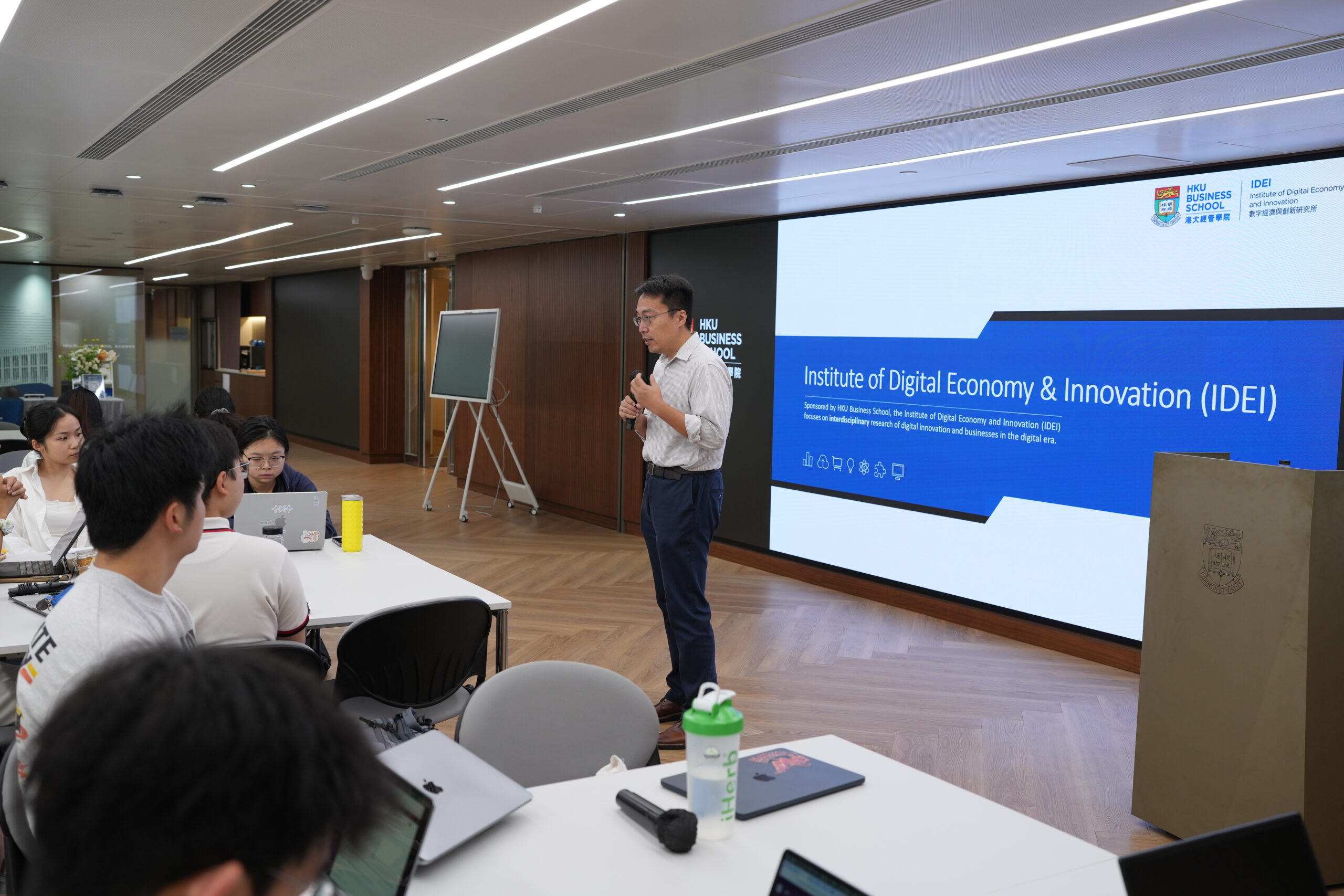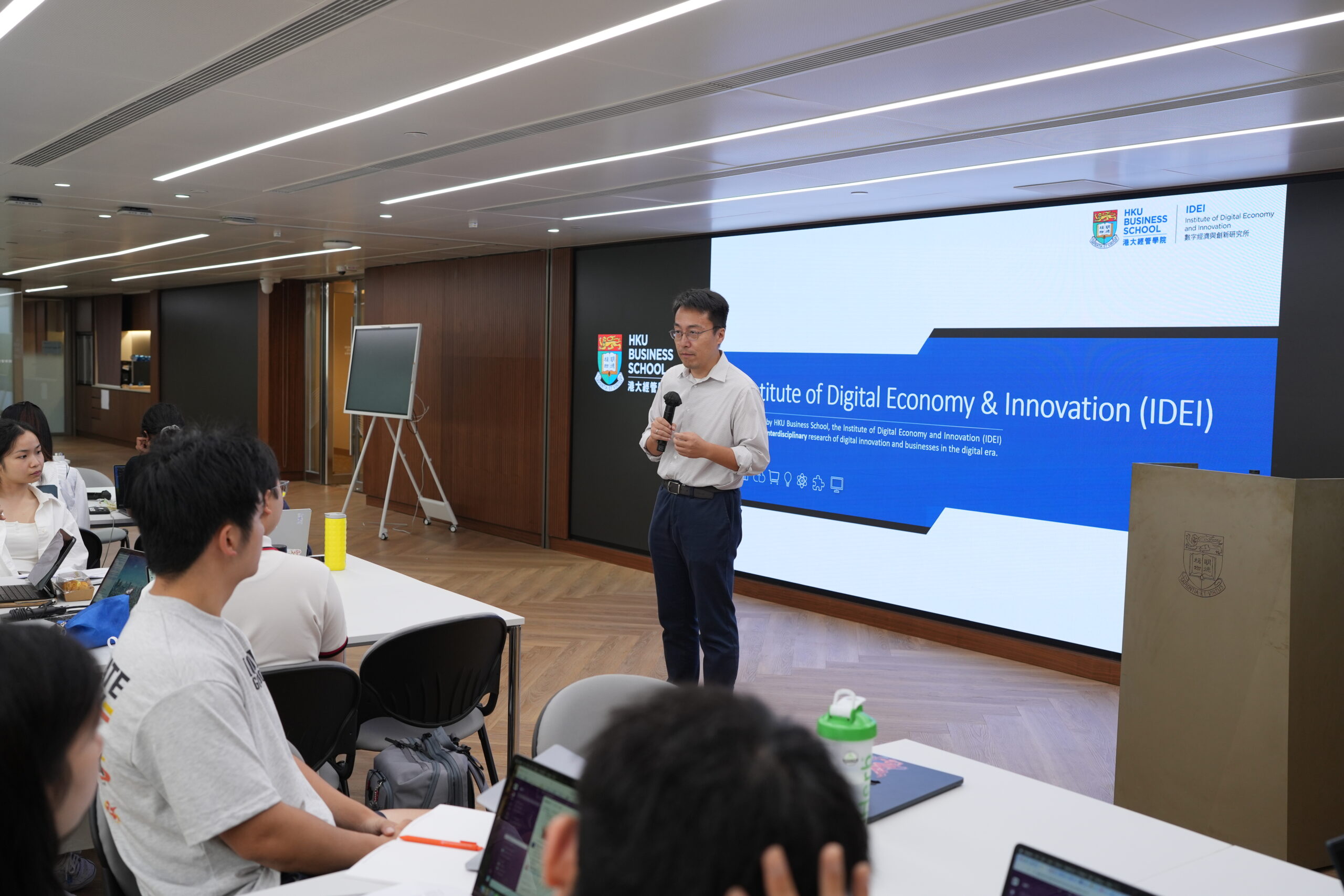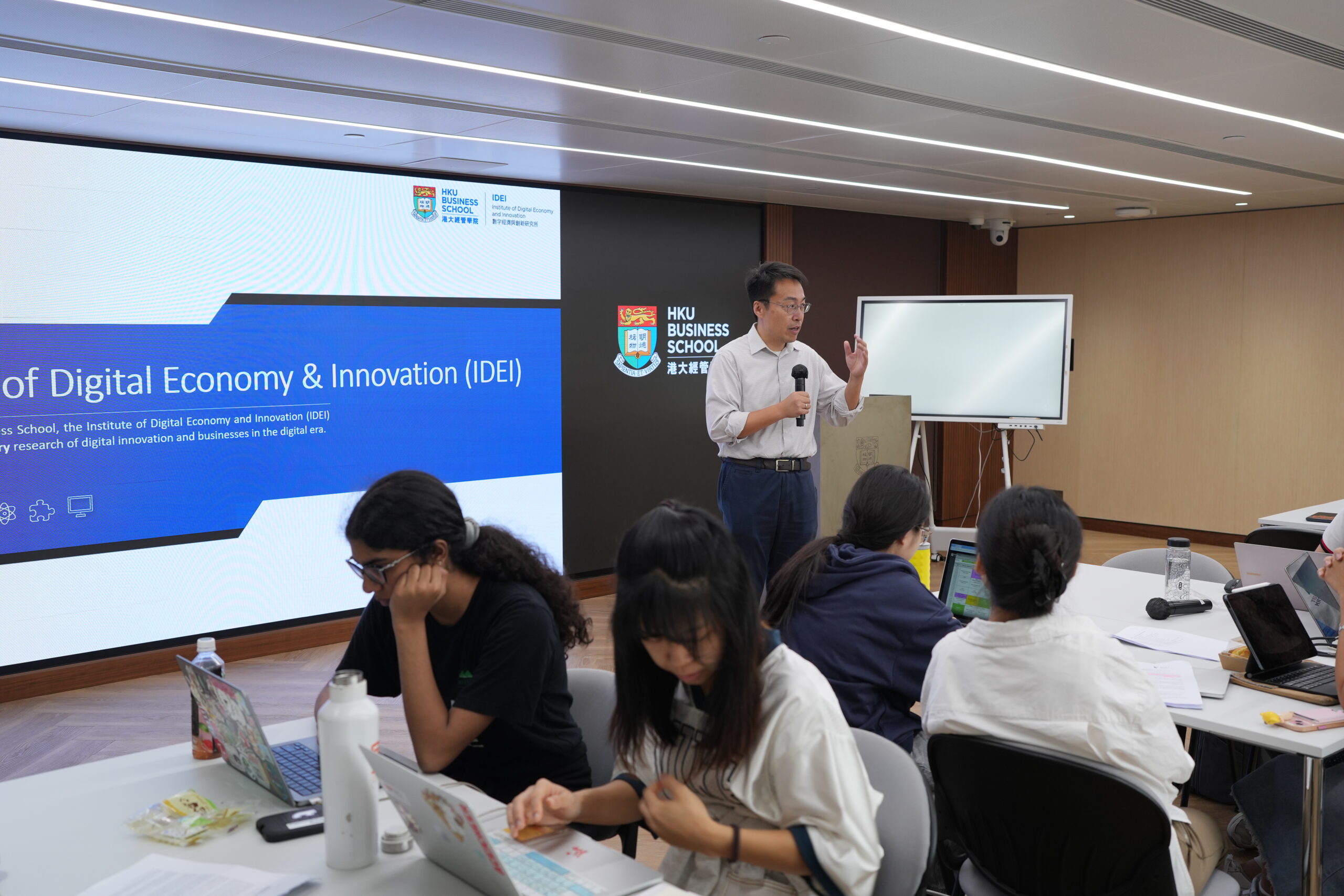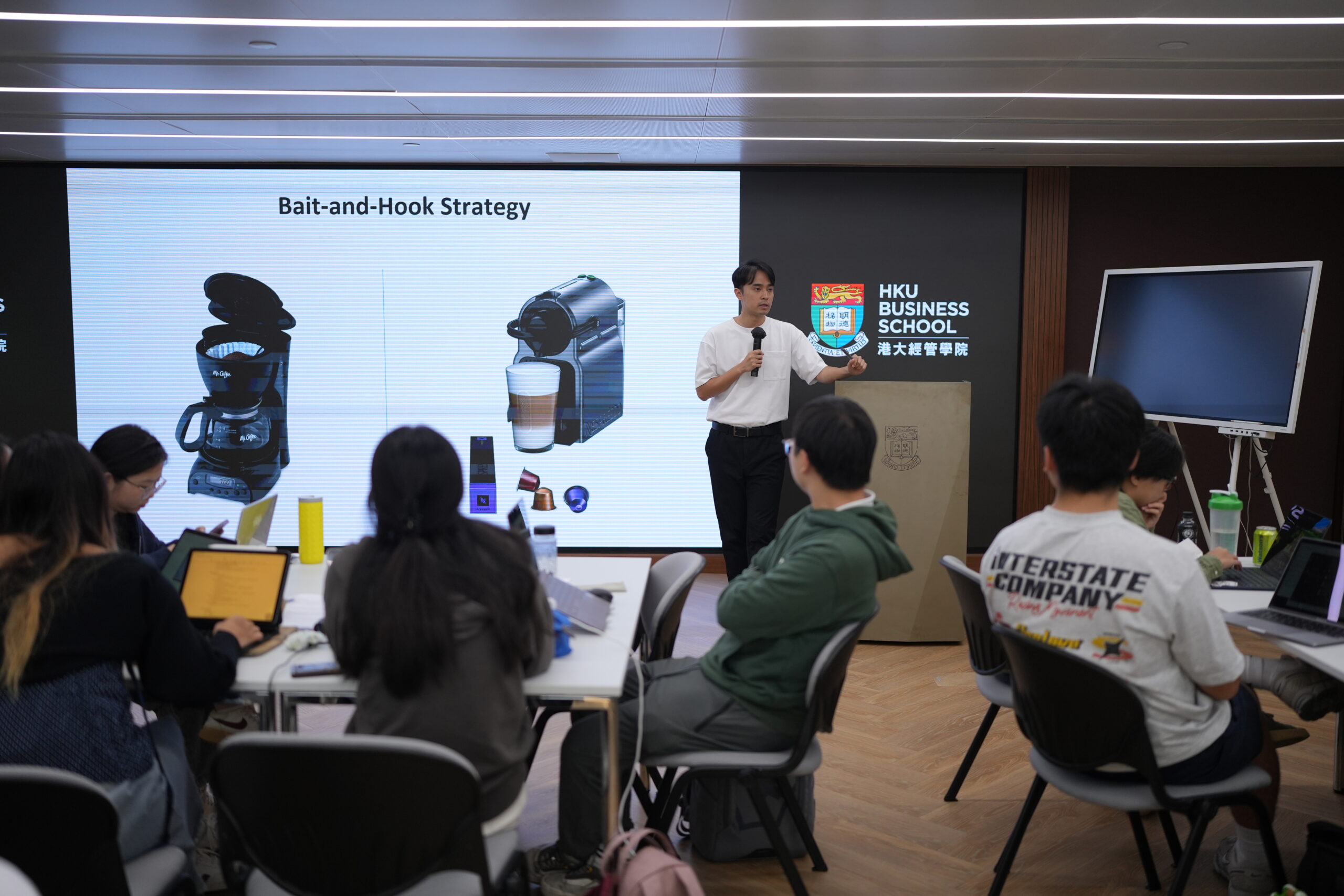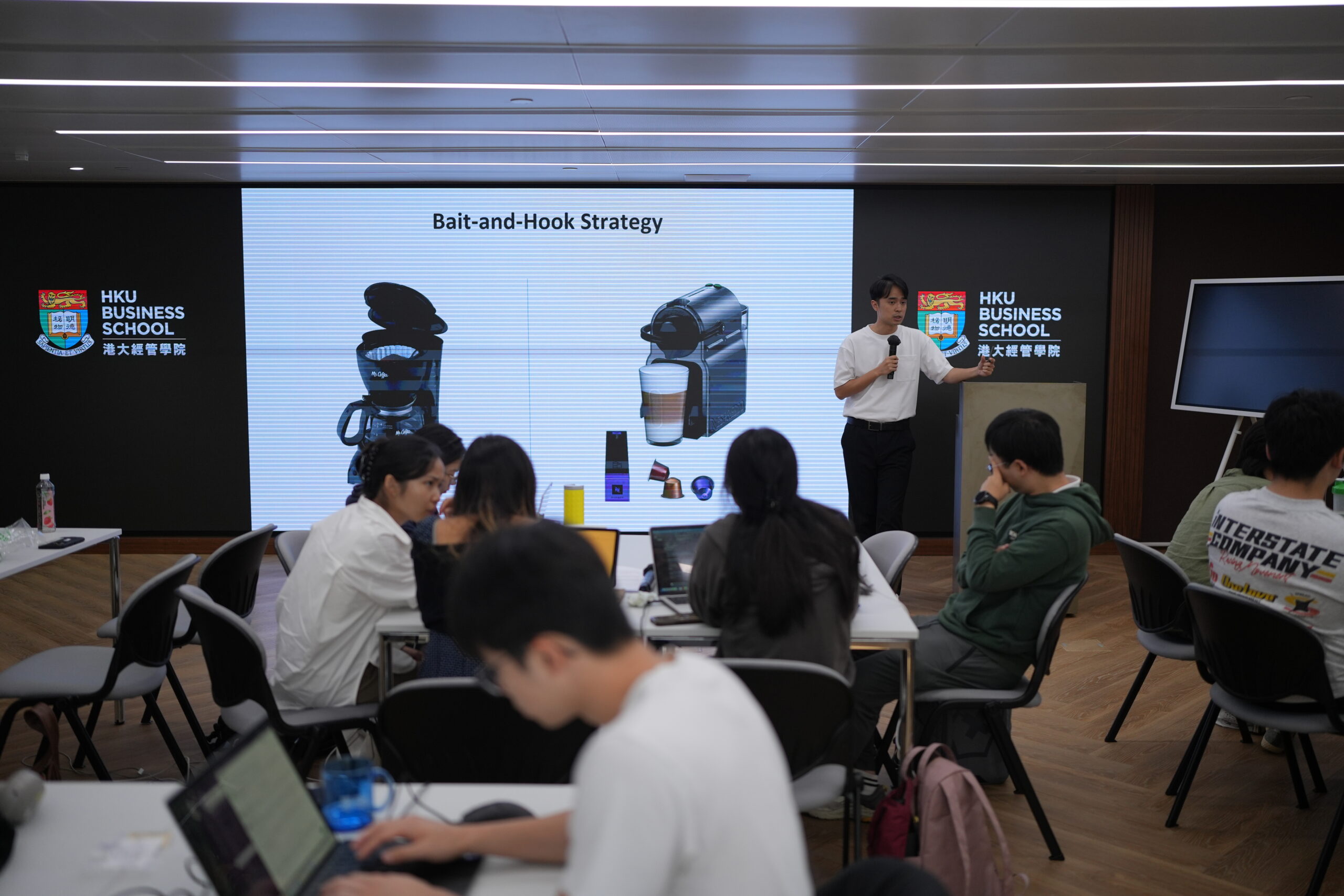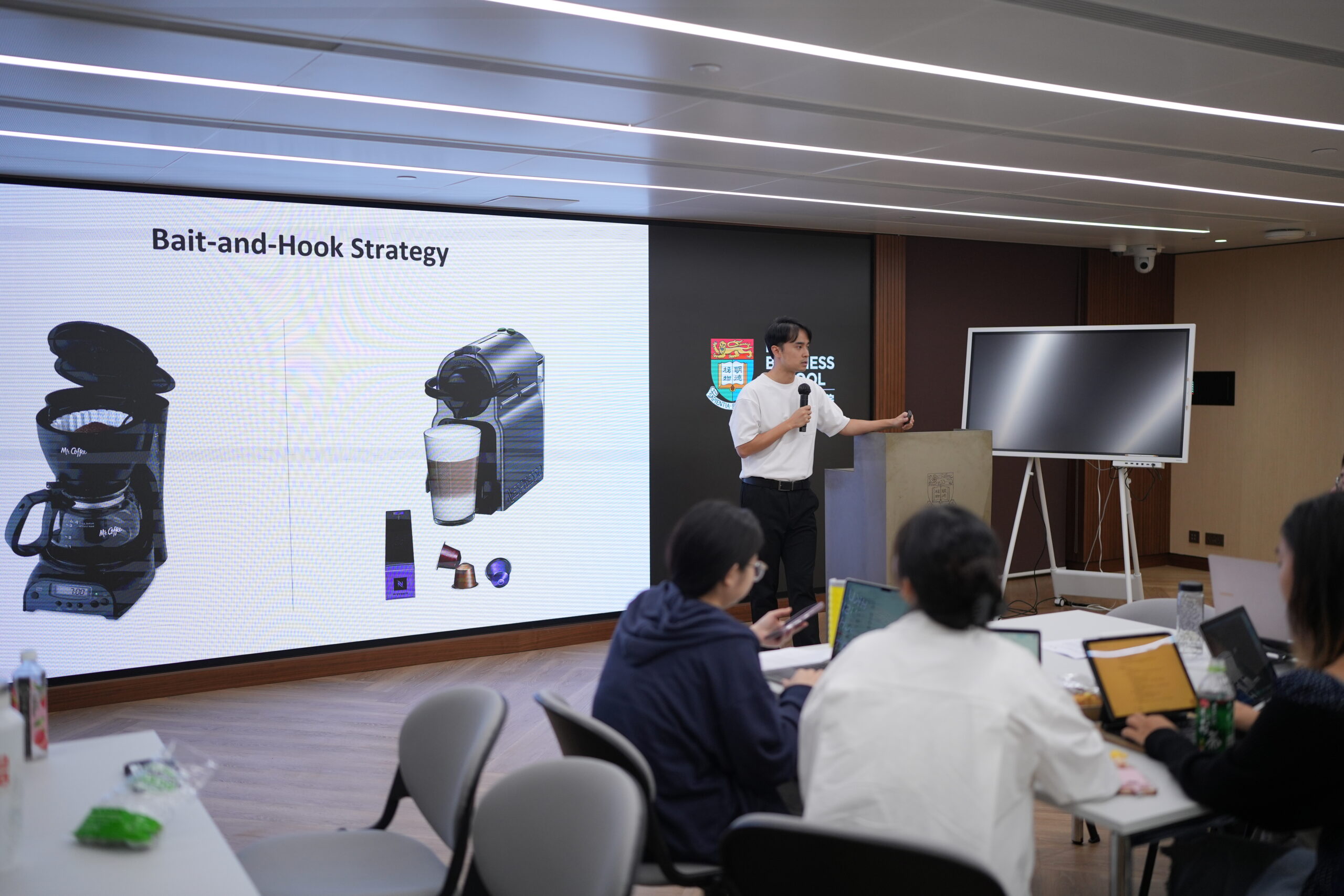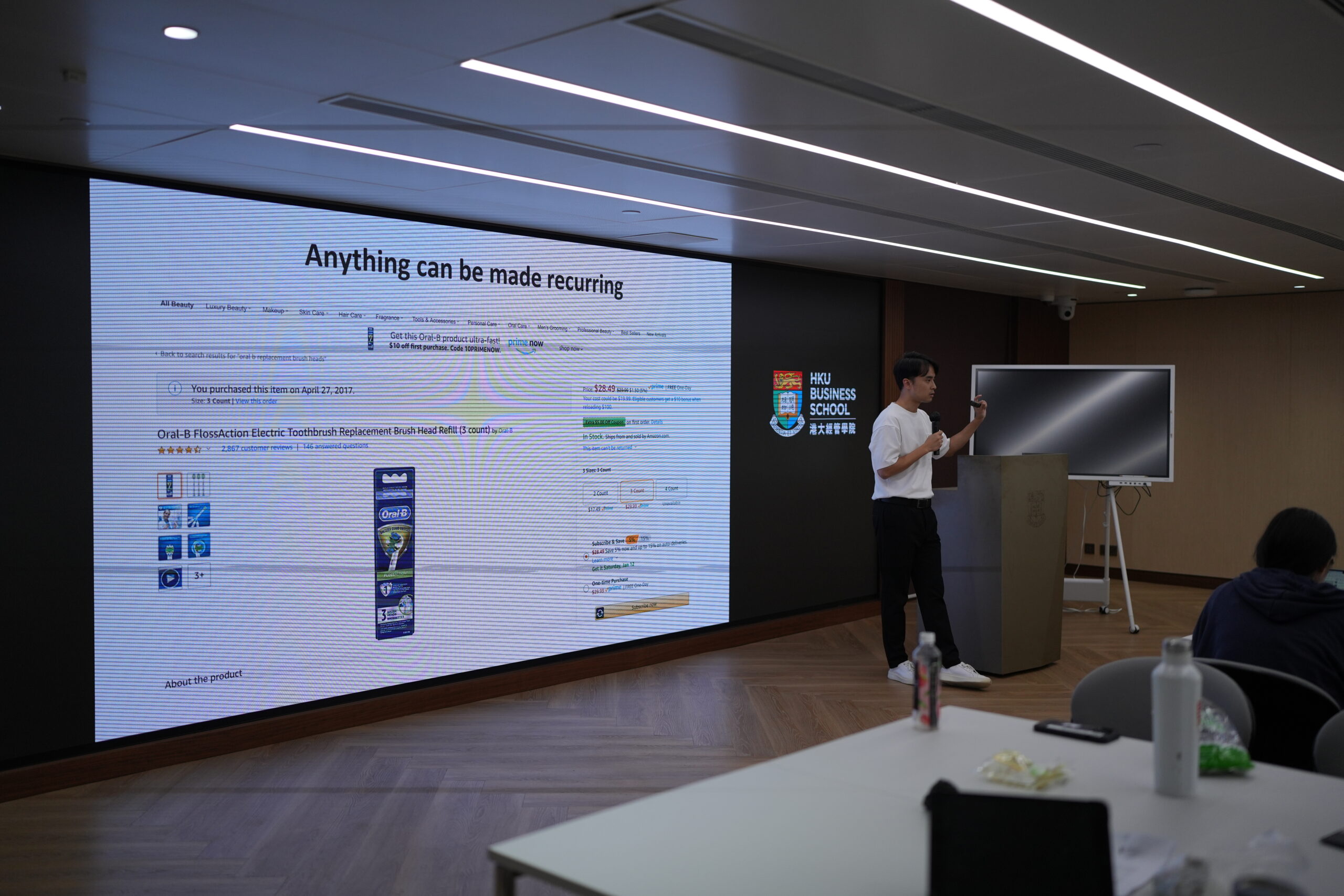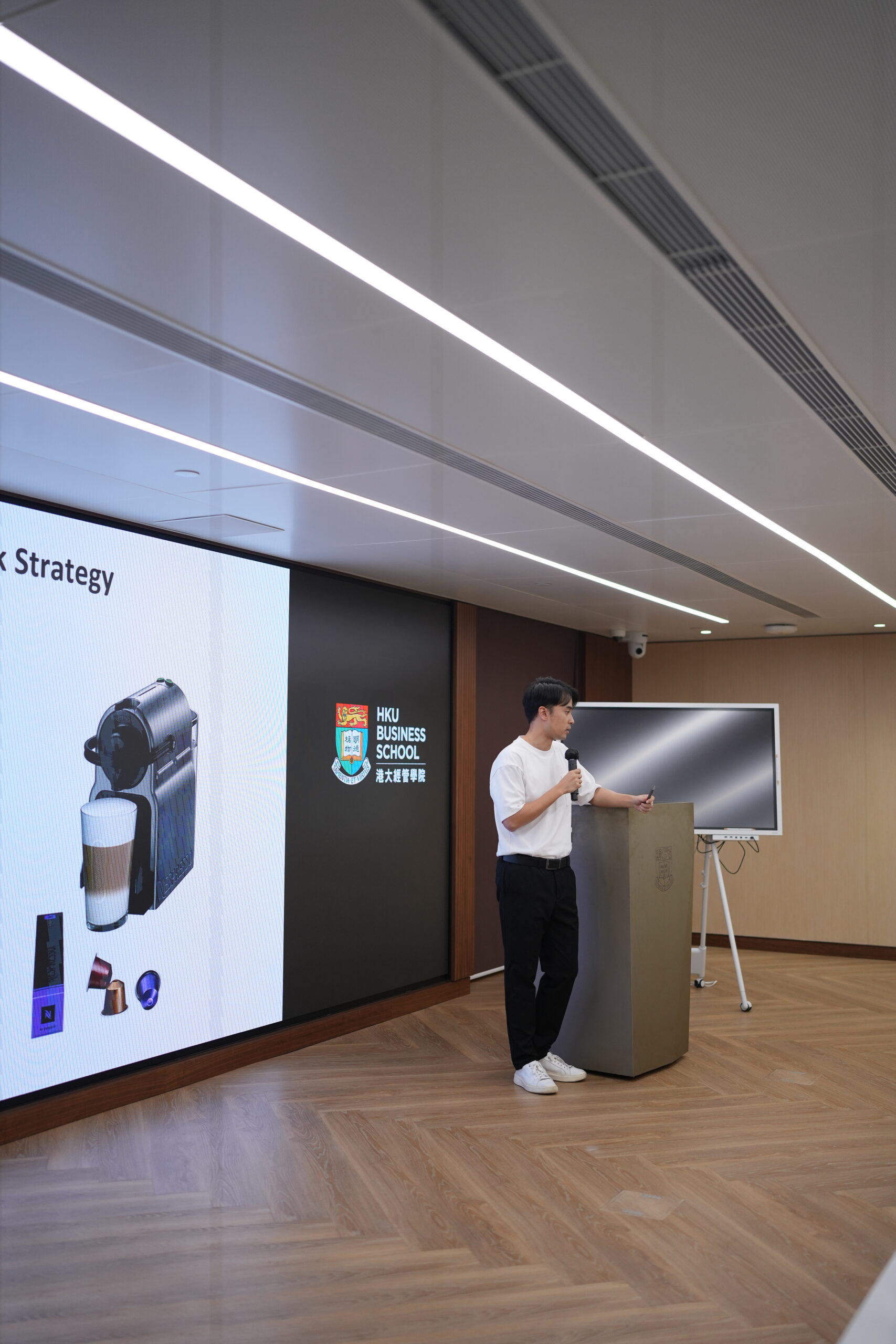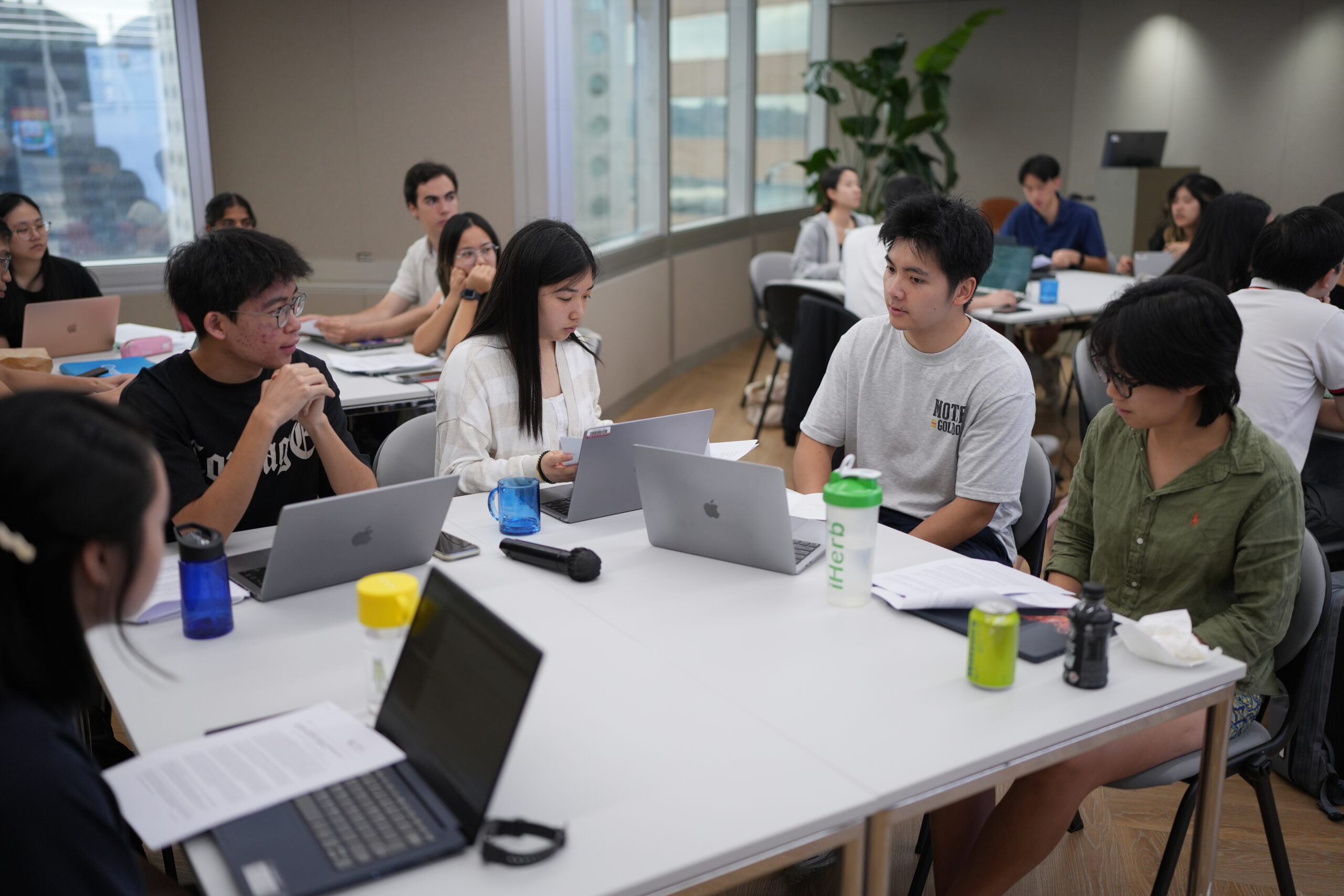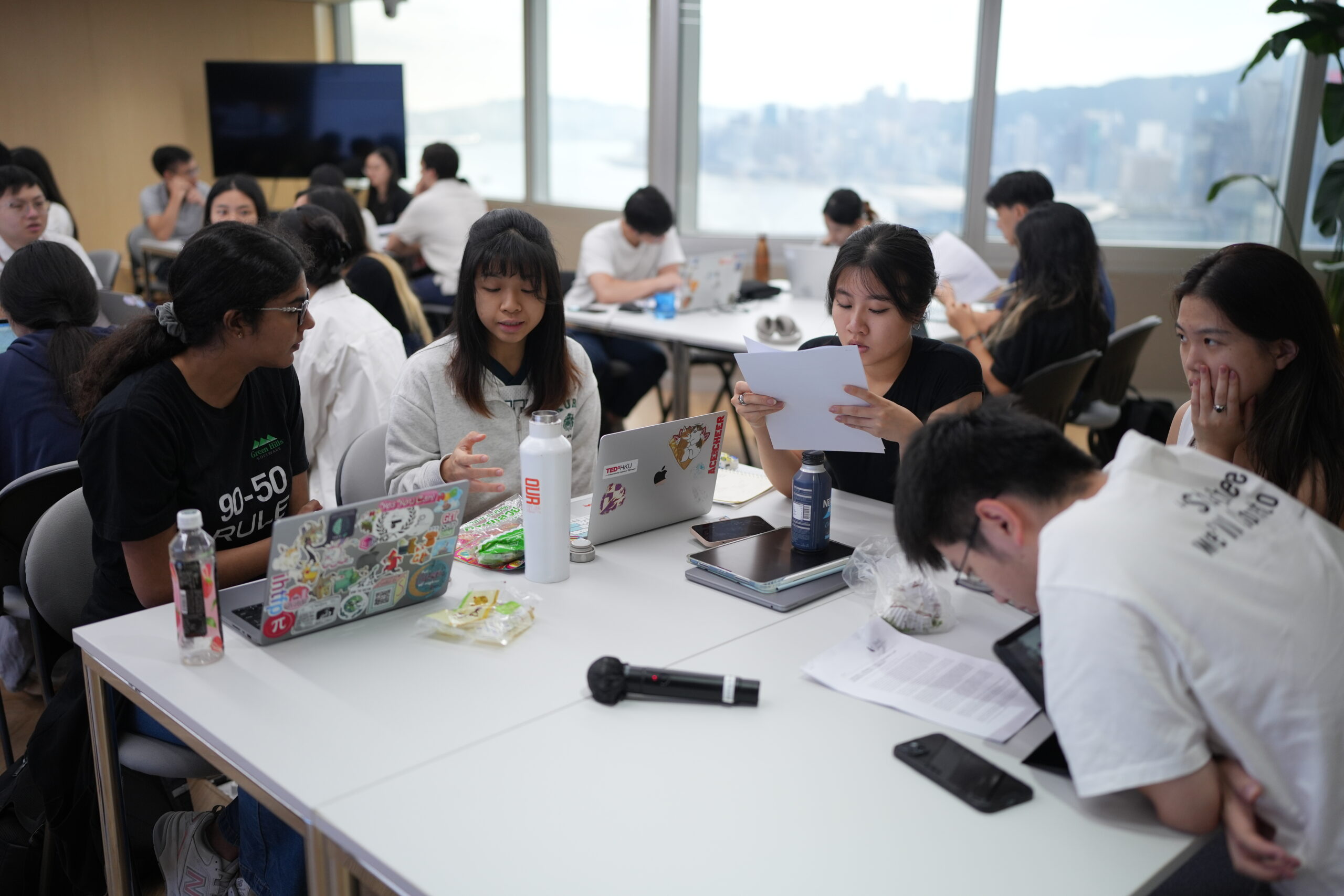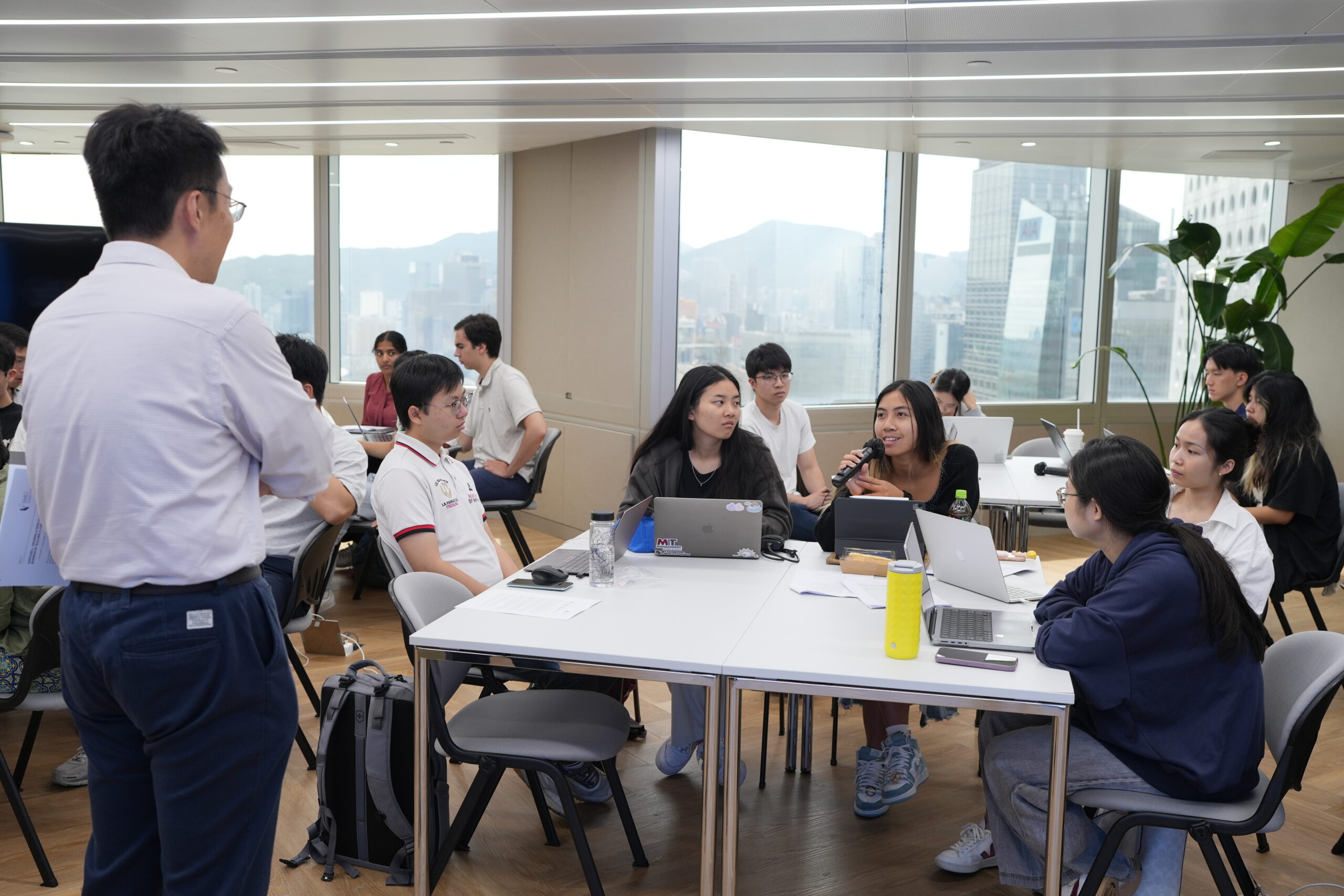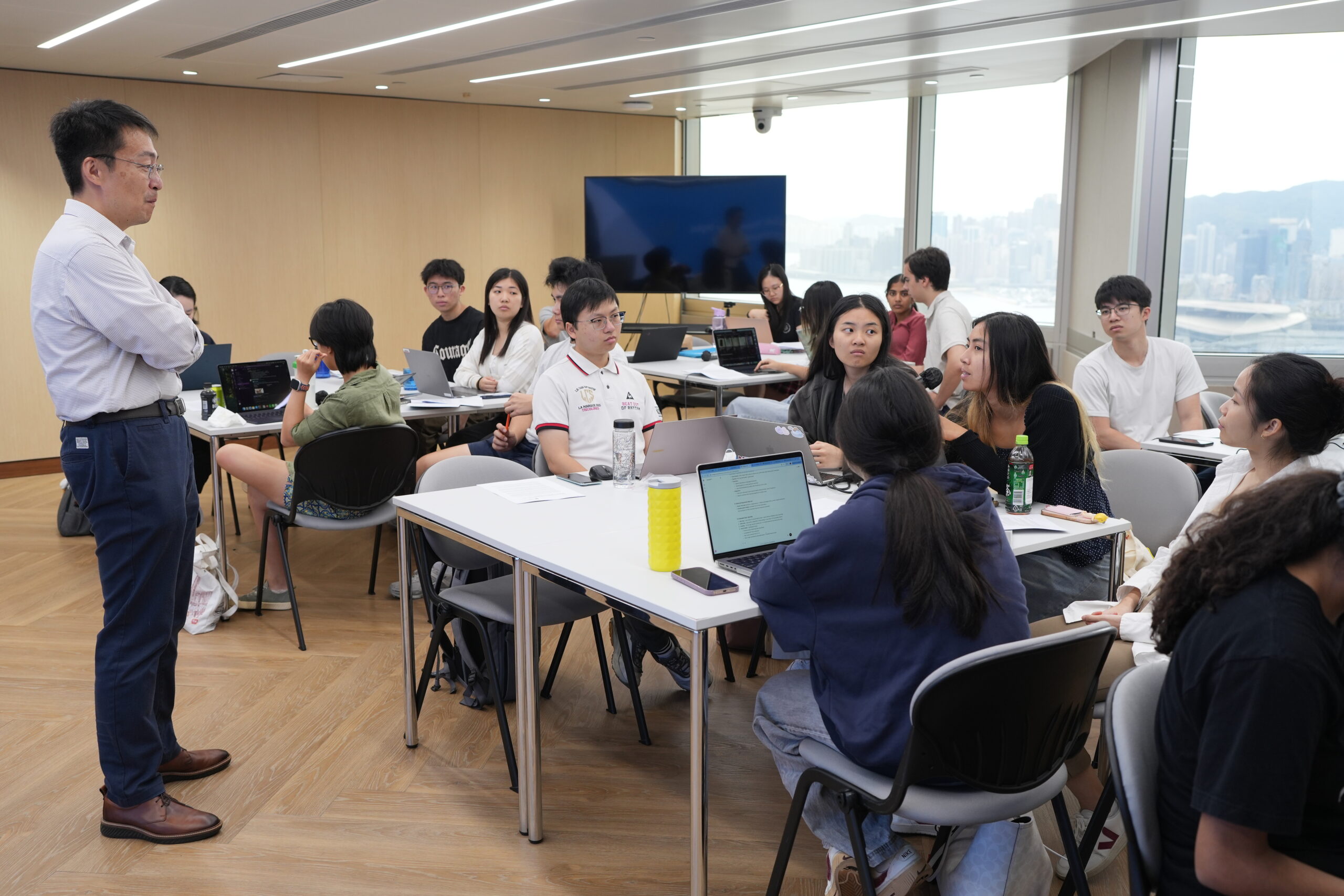

On December 8–9, 2025, the “FinTech in the AI Era Workshop”, co-organized by the Institute of Digital Economy and Innovation (IDEI), HKU Business School, School of Economics and Management, Tsinghua University and the Shenzhen Institute of Economics and Management, Tsinghua University, was held at the HKU Business School Shenzhen Campus.
In his welcome address, Professor Yulin Fang, Director of the Institute of Digital Economy and Innovation and Professor of Innovation and Information Management at HKU Business School, emphasized the workshop’s aim of promoting innovation and advancing research on AI-enabled financial technologies and digital asset ecosystems. The address also introduced a distinguished lineup of speakers from The University of Hong Kong, Tsinghua University, The Chinese University of Hong Kong, Shenzhen, Shenzhen University, and The Hong Kong Polytechnic University.
Professor Juan Feng, Hon Hai Chair Professor, Deputy Chair of the Department of Management Science and Engineering at Tsinghua SEM, Professor at the Institute of Innovation Management at Tsinghua Shenzhen International Graduate School, also called for creating an environment that nurtures critical thinking, creativity, and interdisciplinary scholarship.
Subsequently, Professor Jianliang (Leon) Zhao, Presidential Chair Professor at the Chinese University of Hong Kong, Shenzhen, and Director of the Center on Blockchain and Intelligent Technology, highlighted that while AI coding, or “vibe coding,” can significantly improve productivity and accelerate financial innovation, it also raises ethical and legal risks that require proactive governance.
Professor Juan Feng emphasized the importance of calibrated regulation of policy-driven openness. Moderate data openness can improve bank efficiency and competition, but openness must be capped to prevent platform exit and avoid undermining financial inclusion. There is a need for regulatory guidance and aligned incentives.
Professor Rui Shen, Assistant Dean (Research) at the School of Management and Economics and SFI Chair Professor at The Chinese University of Hong Kong (Shenzhen), shared a study on “sticky expectations,” showcasing that slow market reactions to new information reflect uncertainty about how signals map to firm fundamentals, rather than cognitive bias. The study shows that machine-learning forecasts can serve as a practical benchmark for expectations.
Professor Jian Zhang, Assistant Professor of Finance at HKU Business School, offered his observations on retail investor behaviour. Frequent trading, inadequate diversification, and chasing short-term trends often erode performance. Trading intensity of winners enhances firm-specific private information and contributes to reduces noise.
Professor Kun Chen, Professor at the School of Management, Shenzhen University, provided an overview of the International Conference on Smart Finance (ICSF) 2026, focusing on applying AI to financial decision-making, risk management, and regulatory technology. The goal is to foster interdisciplinary dialogue to better understand market changes in the era of smart finance.
Day two opened with an inspiring keynote speech by Professor Chee-wee Tan, Professor in the Department of Management and Marketing at The Hong Kong Polytechnic University. He shared a study on designing anomaly detection systems. In collaboration with a digital freight platform, the study highlighted the value of adopting a “rules first, AI second” workflow, along with iterative implementation and human–AI feedback loops in dynamic environments.
Professor Yang You, Assistant Professor of Finance at HKU Business School, introduced HKU NFT, an all-in-one data analytics platform. As the NFT market moves beyond hype, data-driven analysis will be essential for assessing its long-term value and supporting more sustainable, well-functioning market development.
Professor Jiaheng Yu, Assistant Professor of Finance at HKU Business School, discussed bank competition through the lens of payment innovation. The study highlighted that open public payment infrastructure can level the playing field, while interest-bearing payment instruments tend to reinforce the advantages of larger banks.
The workshop concluded with an industry panel on “AI Applications in the FinTech Industry: Opportunities and Challenges,” moderated by Professor Yang You. Panelists Mr. Jianbing Liu, Director and COO of Hong Kong Eastern Hopeson Financial Services Group, and Mr. Hao Ling, Head of Data and Strategic Operations at Yibao Technology, shared practical insights on deploying AI in fintech and creating measurable value amid operational complexity, including use cases in insurance.
Attendees’ Sharings
It was a truly inspiring and well-organized workshop, where cutting-edge insights sparked vibrant exchanges which expanded my perspective.
— Yuhong Zhan, Research Assistant, City University of Hong Kong
I am deeply grateful to this community for the opportunity to explore the most advanced applications and research of AI in Finance. It has been a truly enriching experience
— Rongyang Ma, PhD student, Tsinghua University
Attending this fintech workshop has been an immensely valuable experience, where the exchanges with leading professors have provided profound insights for my ongoing academic exploration in digital finance.
— Qingyi Li, PhD student, Tsinghua University
It is a great opportunity to connect with several professors and students who have similar background and also get fruitful insight from keynote talk.
— Yidi Liu, TPG student, HKU
The workshop offered insightful perspectives on FinTech and the application of AI in both academia and industry. It also served as an excellent platform for idea exchange and provided junior students like me with invaluable exposure to cutting-edge views.
— Zirui Wang, UG student, HKU
The FinTech in the AI Era Workshop provided an outstanding platform, and I gained a lot from the scholars’ sharing and discussing academic research.
— Qinxuan Zhang, PhD student, HKU
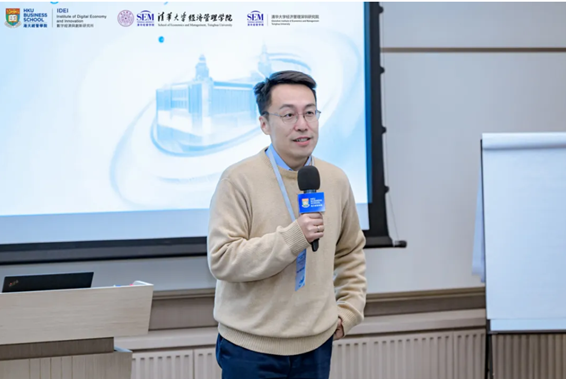
Professor Yulin Fang, Director of the Institute of Digital Economy and Innovation and Professor of Innovation and Information Management at HKU Business School
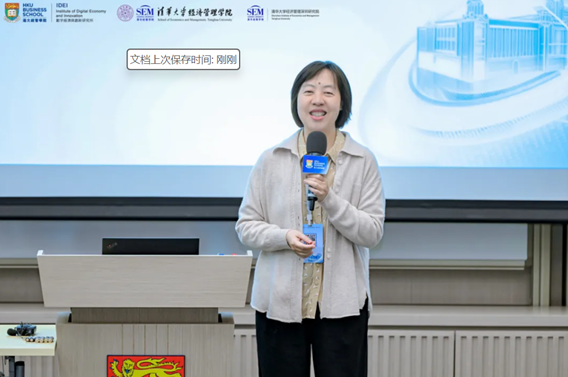
Professor Juan Feng, Hon Hai Chair Professor in the Department of Management Science and Engineering, School of Economics and Management, Tsinghua University
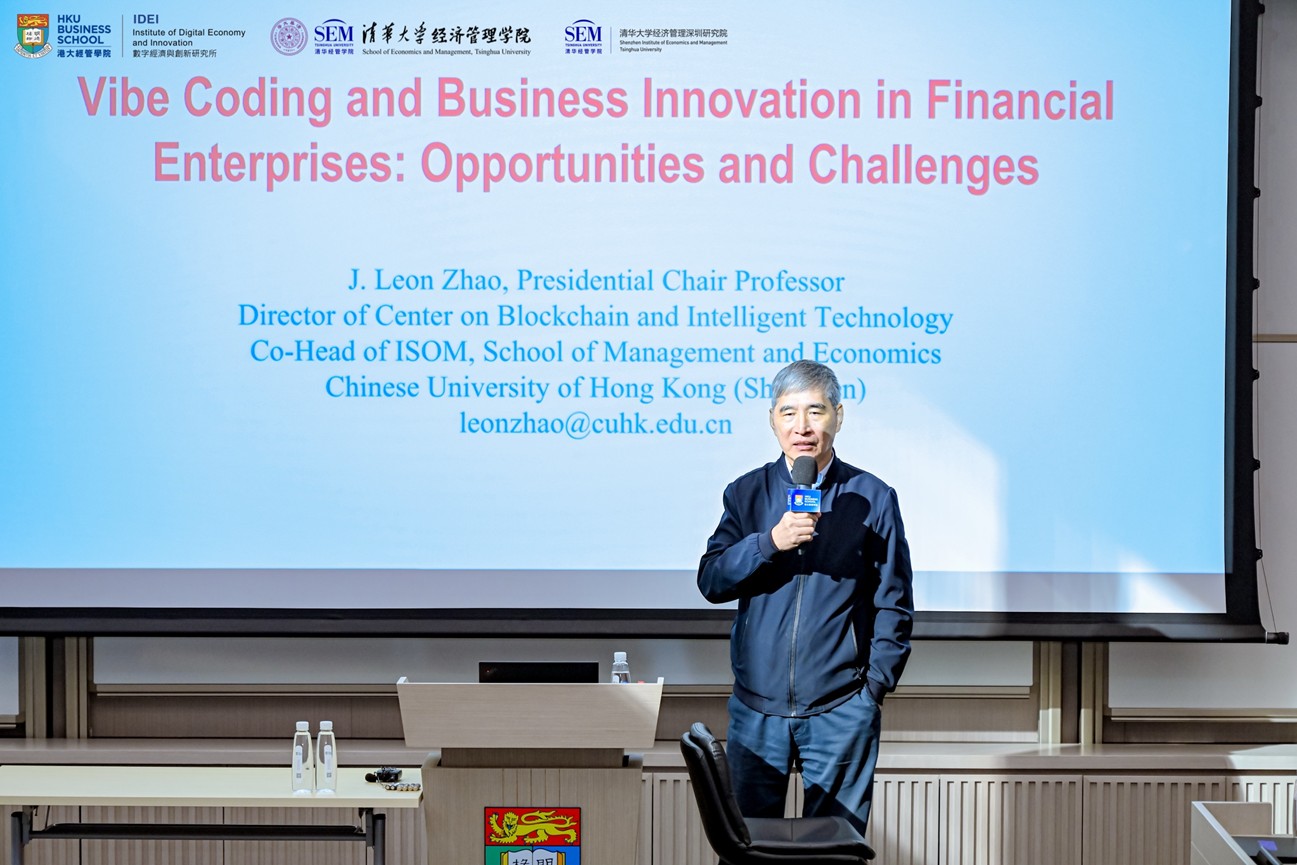
Professor Jianliang (Leon) Zhao, Presidential Chair Professor at the Chinese University of Hong Kong (Shenzhen), and Director of the Center on Blockchain and Intelligent Technology
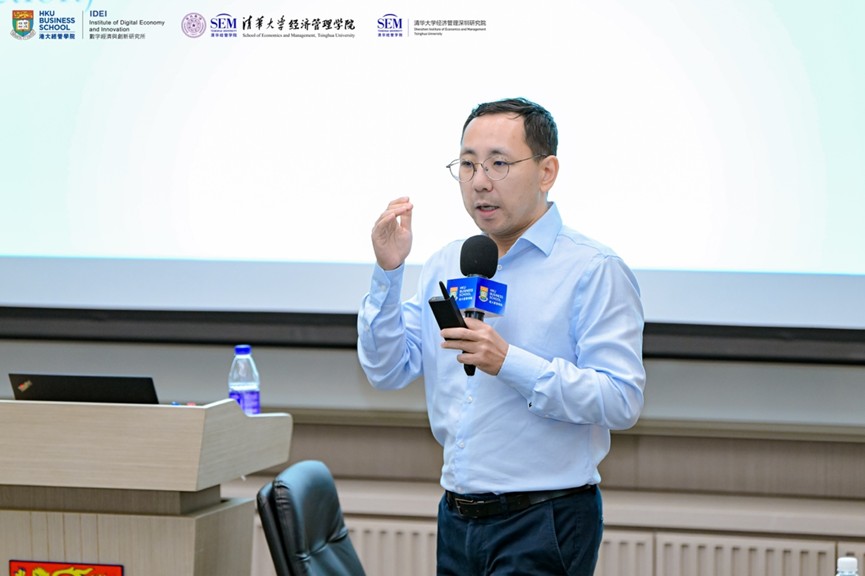
Professor Rui Shen, Assistant Dean (Research) at the School of Management and Economics and SFI Chair Professor at The Chinese University of Hong Kong, Shenzhen
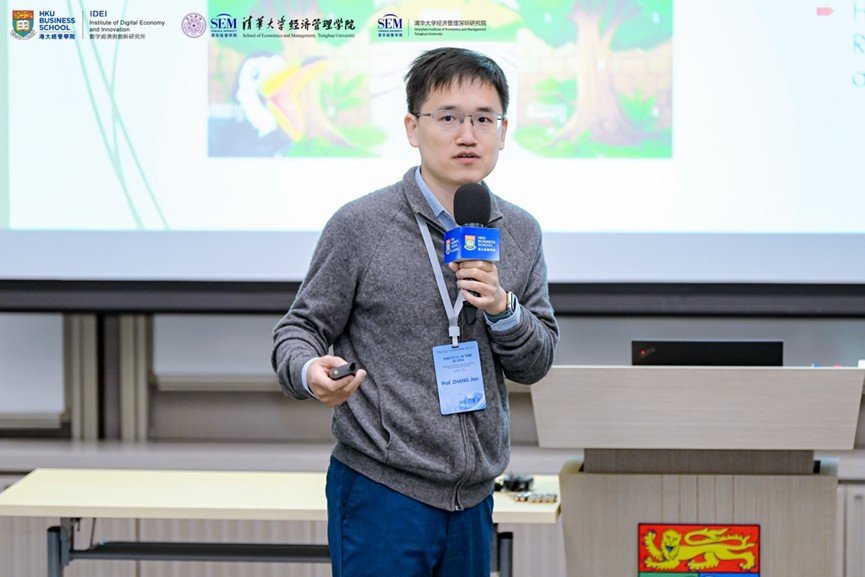
Professor Jian Zhang, Assistant Professor of Finance at HKU Business School
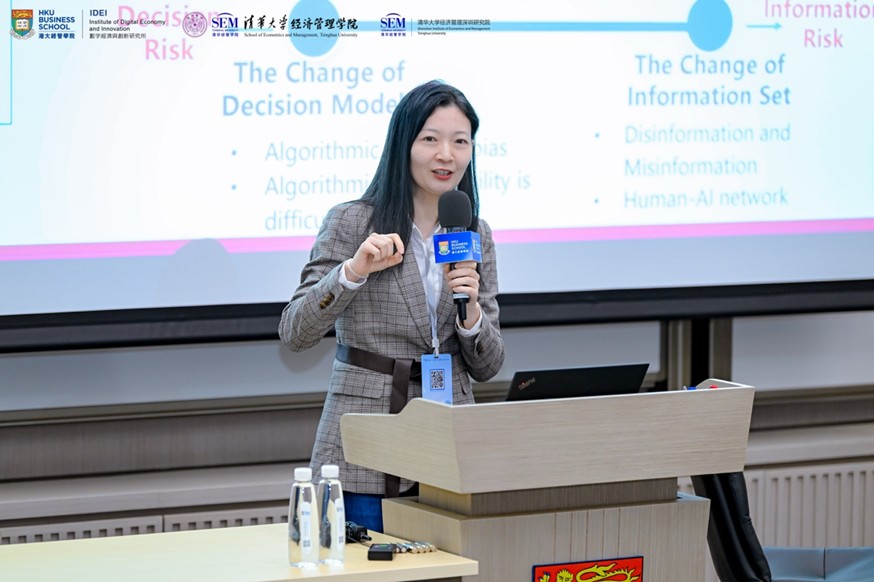
Professor Kun Chen, Professor at the School of Management, Shenzhen University
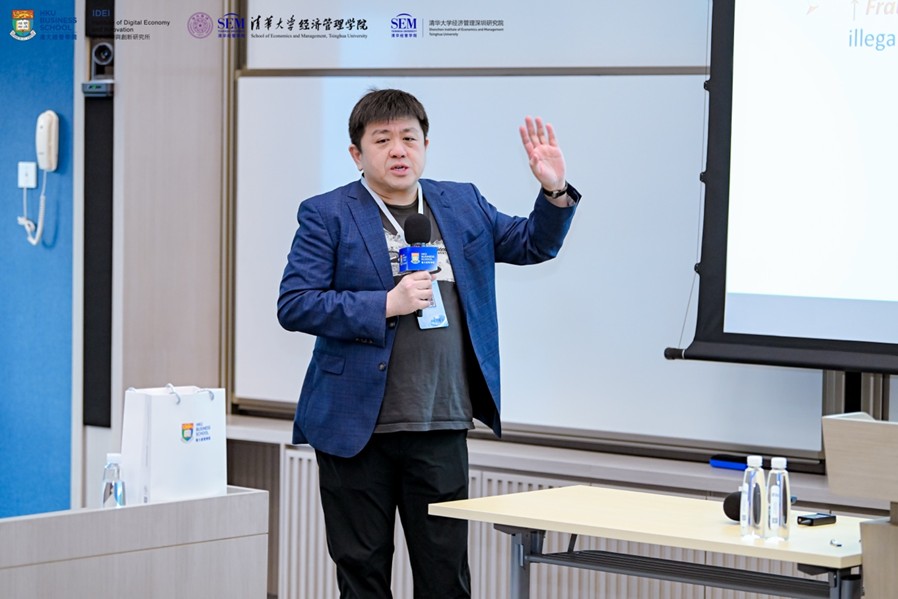
Prof. Chee-wee Tan, Professor in the Department of Management and Marketing at The Hong Kong Polytechnic University
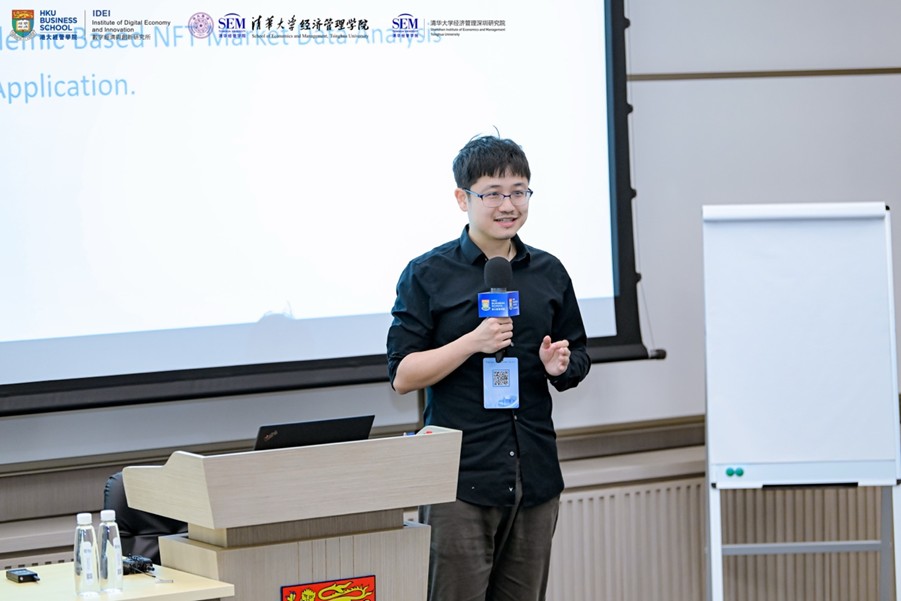
Professor Yang You, Assistant Professor of Finance at HKU Business School
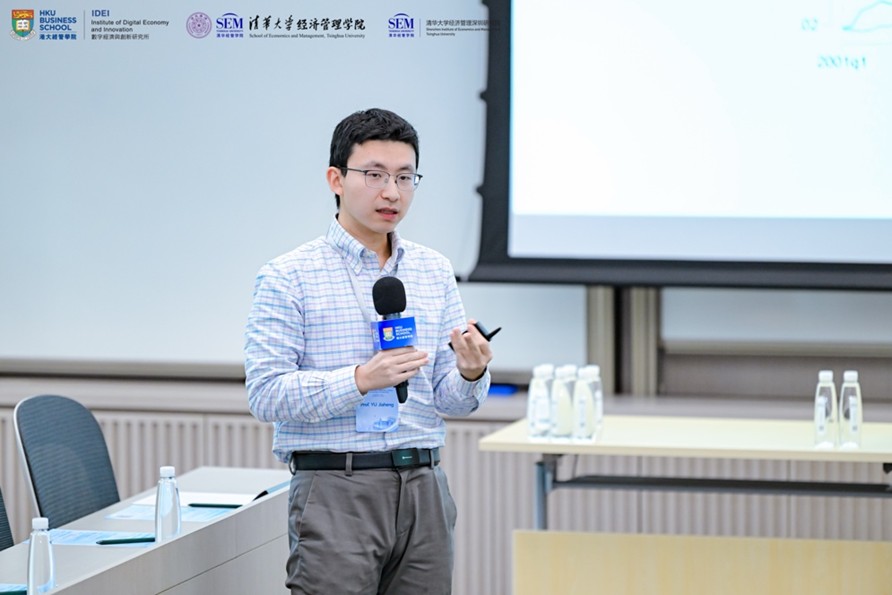
Professor Jiaheng Yu, Assistant Professor of Finance at HKU Business School
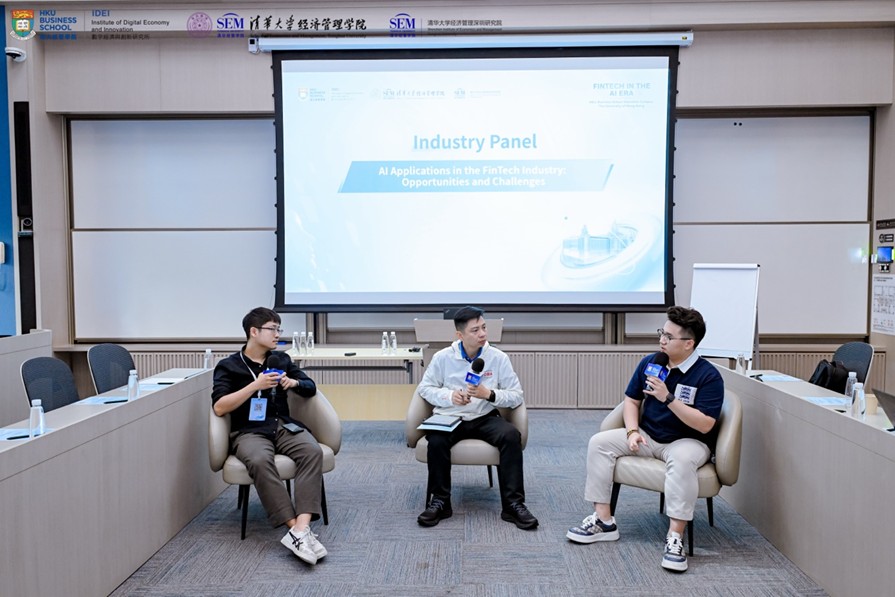
(From Left) Prof. Yang You; Mr. Jianbing Liu, Director and COO of Hong Kong Eastern Hopeson Financial Services Group, and Mr. Hao Ling, Head of Data & Strategic Operations at Yibao
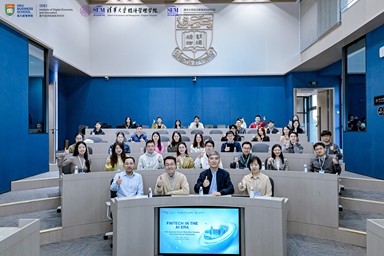
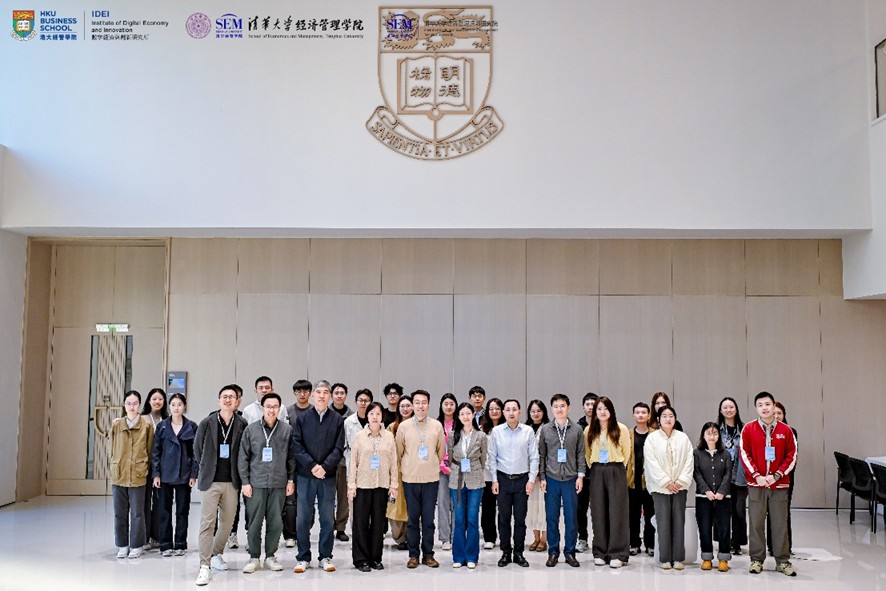
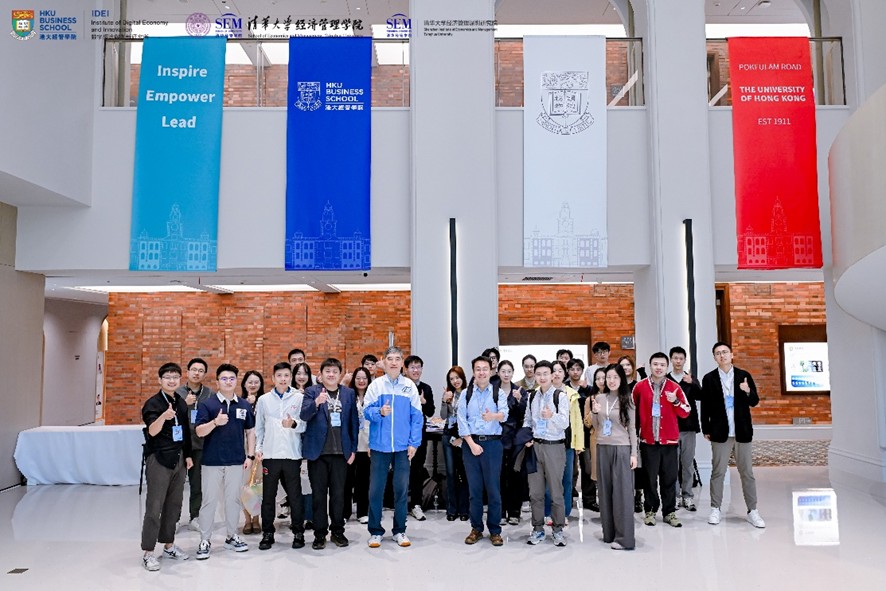
FinTech in the AI Era Workshop group photo
Hi-res photos are available here